Clean Scandinavian Minimalist Textile Design in Organic Cotton | SPARC™ Framework
AI TEXTILE DESIGN LAB
____
Clean Scandinavian Minimalism
in Organic Cotton
Through the SPARC™ Framework
May 6, 2026 | 6 Minute Read
There is something powerful about textiles that embrace imperfection. In an era increasingly dominated by precision, symmetry, and digital perfection, fabrics with irregularity and openness offer a quieter, more human form of luxury.
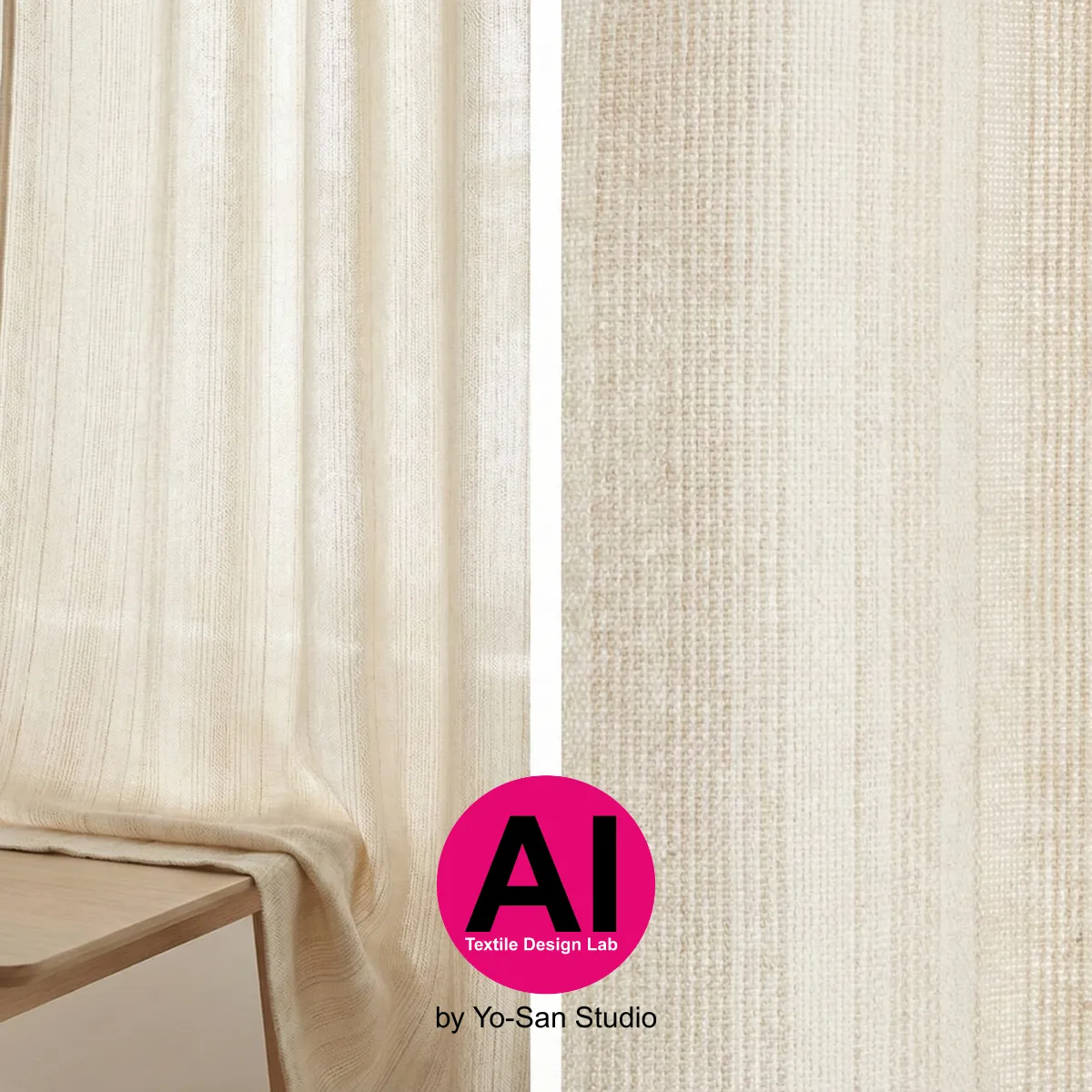
This AI-generated textile concept explores the beauty of breathable structure, raw texture, and organic spacing through the SPARC™ Framework developed for AI textile prompting and design.
The resulting fabric feels sculptural yet soft, almost archaeological in its presence, drawing inspiration from weathered coastal materials, sun-faded gauze, and naturally aged linen surfaces.
Structure: Plain weave
Pattern: Subtle vertical stripe
Aesthetics: Clean, airy, minimal
Reference: Modern Scandinavian interiors
Composition (Fiber): Organic cotton
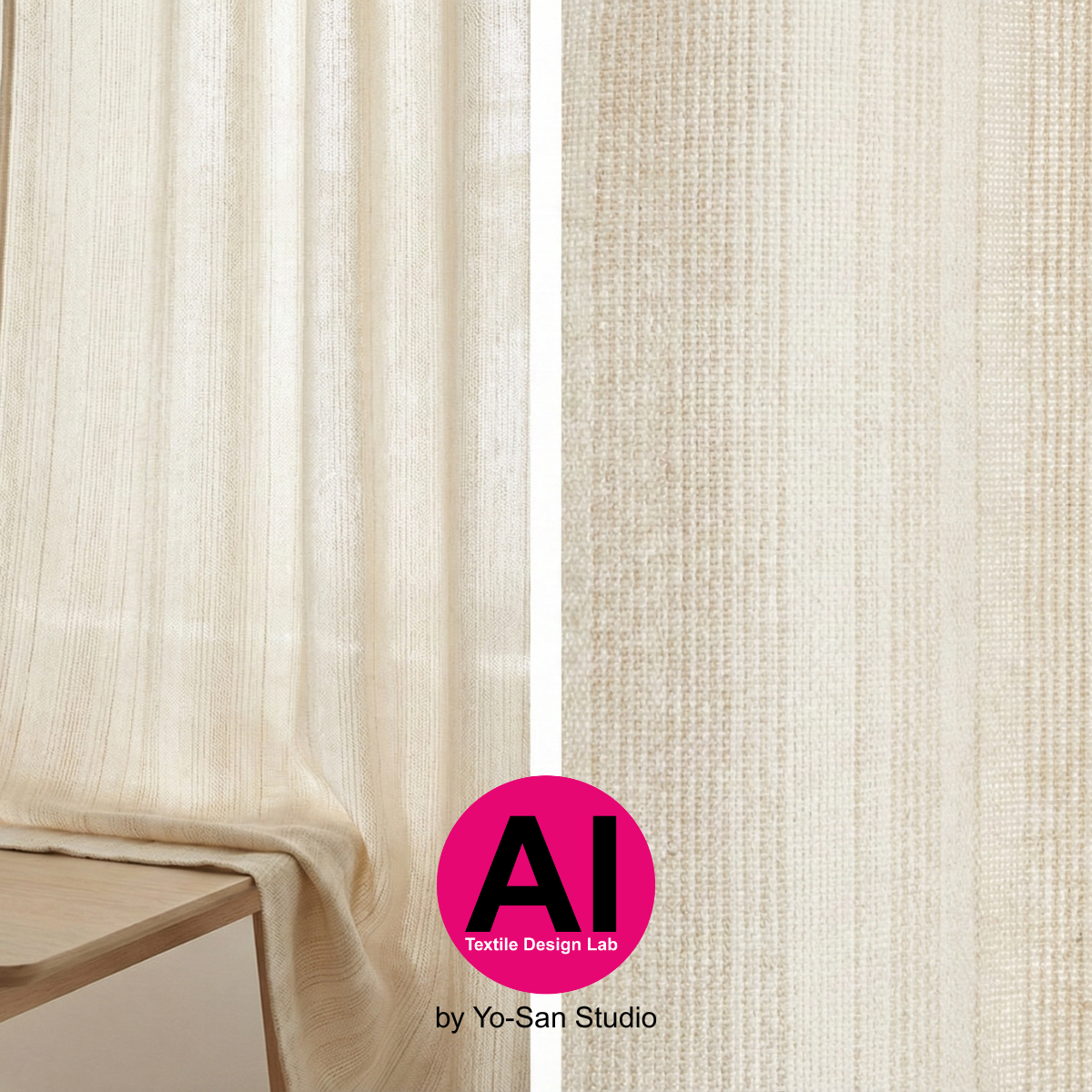
Platform: Google Nano Banana
⚫SPARC™ Prompt (Refined)
Design a lightweight organic cotton textile (Structure) constructed in a refined plain weave with subtle dimensional texture and soft natural irregularities, featuring an understated vertical stripe pattern with elongated tonal rhythm and gentle spacing variation (Pattern). Embrace a clean, airy, and minimalist aesthetic inspired by contemporary Scandinavian interiors, Nordic light, and quiet luxury living environments, emphasizing softness, calm restraint, and architectural simplicity (Aesthetics). Draw inspiration from modern Danish and Swedish interior textiles, natural daylight-filled spaces, muted organic palettes, and elevated sustainable lifestyle design (Reference). Compose the textile using breathable organic cotton fibers with a soft matte surface, relaxed drape, and tactile comfort that communicates natural authenticity and refined everyday luxury (Composition).
Optional Elevated Variations
◾ Softer Luxury Version
Add:
“with whisper tones of warm ivory, oatmilk, soft stone, and pale flax.”
◾ Editorial Interior Version
Add:
“styled as a high-end upholstery or drapery textile for modern boutique hospitality interiors.”
◾ Fashion Textile Version
Add:
“designed for relaxed luxury apparel and contemporary resortwear applications.”
◾ More Textural Version
Add:
“incorporating subtle slub irregularities and barely perceptible woven texture variation.”
⚫SPARC™ Framework Breakdown
S — Structure
Plain Weave
This textile is built upon a classic plain weave foundation, one of the most balanced and timeless textile constructions. The even interlacing creates stability, softness, and visual clarity while allowing subtle texture and light filtration to take center stage. The lightweight construction enhances breathability and contributes to the fabric's calm, understated character.
P — Pattern
Subtle Vertical Stripe
The pattern introduces a quiet vertical rhythm through soft tonal striping and gentle spacing variation. Rather than functioning as a bold graphic statement, the stripes create movement, elongation, and refinement. The understated repetition reinforces the textile's minimalist nature while adding visual depth and structure.
A — Aesthetics
Light, breathable, imperfect
The fabric communicates softness and fragility while still maintaining sculptural integrity. Frayed edges, loose fibers, and open spaces reinforce the idea that imperfection itself can become a luxury aesthetic.
R — Reference
Modern Scandinavian Interiors
The textile draws inspiration from Scandinavian interior environments known for their balance of warmth, functionality, and simplicity. Influences include Nordic daylight-filled spaces, natural wood tones, sustainable living concepts, soft neutral palettes, and tactile woven materials commonly found in contemporary Danish and Swedish interiors.
C — Composition (Fiber)
Organic Cotton
Organic cotton provides the material foundation for the textile, reinforcing softness, breathability, and sustainability. The fiber content contributes a matte natural surface, relaxed drape, and approachable comfort while supporting the clean, refined visual language of the design. Its natural authenticity aligns closely with Scandinavian philosophies of simplicity and intentional living.
⚫Design Reflection
One of the most compelling aspects of AI textile exploration is the ability to elevate simplicity into something emotionally resonant and materially rich.
This textile succeeds because it embraces restraint rather than excess. The subtle vertical striping, soft woven texture, and understated palette work together to create an atmosphere of calm sophistication rather than overt visual complexity. The plain weave structure allows texture, light, and rhythm to quietly become the focal point.
The Scandinavian influence is especially effective because it prioritizes balance, softness, and intentional living. Instead of relying on decorative intensity, the textile communicates through openness, tactile subtlety, and the authenticity of refined materials.
The resulting image feels somewhere between an interior textile, an architectural surface, and a quiet luxury fabric design, demonstrating how minimalism can still convey warmth, depth, and visual presence when guided by thoughtful textile direction.
⚫AI Tool(s) Used
Google Nano Banana
SPARC™ Framework
⚫Creative Exploration Ideas
This textile direction offers strong potential for expansion across interior, fashion, and sustainable textile applications. Consider exploring the following variations and design pathways:
Develop layered tonal stripe variations using warm ivory, oat, stone, and soft flax neutrals for a broader Scandinavian-inspired collection.
Experiment with alternative weave structures, such as basket weave, gauze, or dobby, while maintaining the minimalist aesthetic language.
Translate the textile into lightweight drapery concepts for boutique hospitality interiors, wellness spaces, or modern residential environments.
Introduce subtle slub yarns or irregular woven textures to enhance the fabric's handcrafted, organic visual quality.
Explore sustainable fiber blends such as organic cotton–linen, hemp–cotton, or TENCEL™ combinations to create additional tactile and environmental narratives.
Adapt the vertical stripe rhythm into oversized engineered panels or architectural textile installations for contemporary interiors.
Reimagine the textile for relaxed luxury fashion applications, including resortwear, soft tailoring, scarves, or elevated loungewear collections.
Investigate tonal dye gradients, sun-faded effects, or washed surface treatments inspired by Nordic natural light and weathered coastal environments.
Create companion textiles with the same SPARC™ direction but with varied scale, density, or transparency to support coordinated collection development.
Explore how this minimalist textile language could intersect with smart textiles, acoustic fabrics, or wellness-centered material design concepts.
⚫Try Your Own Variation
Experiment by adjusting just one SPARC™ category:
◾ Change the structure to gauze or basket weave
◾ Replace vertical stripes with tonal grids
◾ Shift the aesthetic toward rustic minimalism or quiet luxury
◾ Reference Japanese interiors instead of Scandinavian design
◾ Explore linen, hemp, or silk blends for composition
Small changes inside the SPARC™ framework can create dramatically different textile outcomes while maintaining conceptual cohesion.
⚫ About the AI Textile Design Lab
The AI Textile Design Lab by Yo-San Studio explores the intersection of textile knowledge, creativity, and artificial intelligence through frameworks like SPARC™ and STITCH™. The community supports designers, educators, artists, and innovators interested in the future of AI-powered textile exploration.
