Wildflower Studies in Thread: Exploring Botanical Embroidery Through the STITCH™ Framework
AI TEXTILE DESIGN LAB
____
Wildflower Studies in Thread: Exploring Botanical Embroidery
Through the STITCH™ Framework
May 8, 2026 | 5 Minute Read
There is a quiet intimacy to textiles inspired by nature. Soft botanical embroidery, muted thread palettes, and visible hand-crafted irregularities create surfaces that feel less manufactured and more remembered.
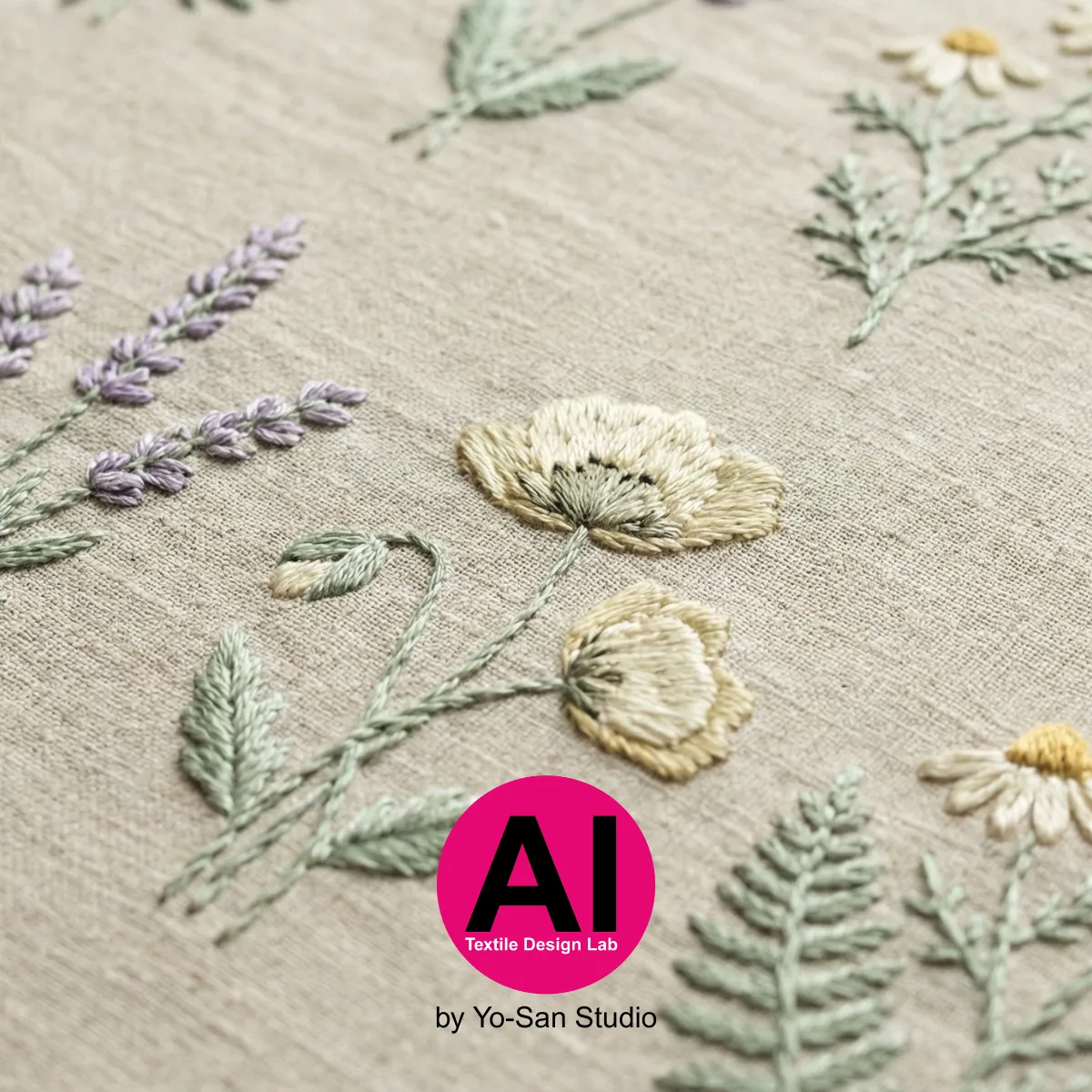
This embroidered linen concept draws from vintage wildflower studies and heritage stitching traditions, transforming delicate floral observation into tactile textile storytelling through the STITCH™ Framework.
⚫STITCH™ Prompt
Structure: Linen ground fabric
Technique: Satin stitch
Inspiration: Wildflower sketches
Thread: Cotton embroidery thread
Color: Soft sage, ivory, muted yellow
Hand: Dry, natural, lightly textured
Platform: Google Nano Banana
⚫STITCH™ Prompt (Refined)
Design an embroidered linen textile (Structure) featuring delicate satin stitch embroidery with softly layered botanical motifs, fine directional stitchwork, and organically spaced floral compositions that mimic hand-stitched artisanal craftsmanship (Technique). Draw inspiration from vintage wildflower sketchbooks, botanical field studies, pressed garden specimens, and heritage embroidery samplers that celebrate quiet natural observation and organic asymmetry (Inspiration). Construct the embroidery using matte cotton embroidery threads with subtle stitch definition, soft surface variation, and naturally tactile texture that enhances the handmade character of the textile (Thread). Employ a muted botanical palette of soft sage green, faded ivory, pale butter yellow, lavender mist, and weathered neutral tones that gently diffuse across the linen surface (Color), resulting in a dry, natural, lightly textured hand with relaxed softness, artisanal irregularity, and understated botanical elegance (Hand).
⚫STITCH™ Framework Breakdown
S — Structure
Linen Ground Fabric
The linen ground fabric provides a stable yet naturally textured surface that reinforces the embroidery's organic, handcrafted qualities. Its visible slub texture and matte appearance contribute warmth, softness, and material authenticity to the textile composition.
T — Technique
Satin Stitch
The satin stitch technique introduces smooth directional thread coverage and gentle dimensional definition across the floral motifs. The controlled stitch density allows the botanical forms to feel soft and refined while still preserving an artisanal hand-crafted appearance.
I — Inspiration
Wildflower Sketches
The textile draws inspiration from botanical field sketches, preserved herbarium studies, and softly illustrated wildflower observations. The floral arrangements feel natural and unforced, emphasizing delicate asymmetry and the quiet rhythm of organic growth.
T — Thread
Cotton Embroidery Thread
Cotton embroidery thread reinforces the matte, natural aesthetic of the textile while contributing tactile softness and subtle surface variation. The thread choice avoids excessive sheen, allowing the embroidery to feel grounded, understated, and authentic.
C — Color
Soft Sage, Ivory, Muted Yellow
The color palette reflects softened botanical tones inspired by dried florals, faded gardens, and vintage textile studies. Sage green, muted yellow, and warm ivory tones create a calm and restorative visual atmosphere that complements the linen foundation beautifully.
H — Hand
Dry, Natural, Lightly Textured
The finished textile communicates an earthy softness with gentle structural texture. The linen and cotton combination creates a dry hand that feels breathable, artisanal, and naturally imperfect while maintaining visual refinement.
⚫Design Reflection
One of the most compelling aspects of AI textile exploration is the ability to recreate the emotional quietness of handmade textile traditions through digitally generated surfaces.
This textile succeeds because it prioritizes subtlety and material honesty over visual excess. The linen ground introduces softness and natural irregularity, while the satin stitch embroidery provides controlled detail and delicate botanical structure. The motifs feel observational rather than decorative, as though they were carefully collected from nature and translated slowly into thread.
The muted palette is especially effective because it reinforces the composition's calm, archival quality. Rather than relying on saturated color or dense ornamentation, the textile communicates through softness, restraint, and tactile authenticity.
The resulting image feels somewhere between heritage embroidery, botanical documentation, and contemporary artisan textile design, demonstrating how AI-assisted textile exploration can preserve the emotional language of handcrafted surface traditions.
⚫AI Tool(s) Used
Google Nano Banana
STITCH™ Framework
⚫Creative Exploration Ideas
This embroidered textile direction offers strong opportunities for expansion across artisan embroidery, slow-fashion design, botanical surface development, and heritage-inspired textile storytelling. By experimenting with stitch density, thread variation, and naturally inspired color palettes, designers can evolve this soft botanical language into a wide range of contemporary and heirloom-inspired textile applications. Consider exploring the following creative directions and material variations:
Explore denser botanical clustering for heirloom-inspired embroidery compositions.
Introduce running stitch, seed stitch, or French knot details for added textural variation.
Experiment with naturally dyed thread palettes inspired by wild herbs, soil, stone, or faded florals.
Adapt the embroidery direction into table linens, scarves, slow-fashion garments, or textile art panels.
Investigate oversized embroidered botanical motifs for contemporary interior textile applications.
Explore monochromatic thread studies using tonal sage or soft ivory embroidery for minimalist interpretations.
Translate the floral sketch aesthetic into layered appliqué or mixed-media embroidery concepts.
Combine visible mending aesthetics with botanical embroidery to tell sustainability-inspired textile stories.
⚫Try Your Own Variation
“Design a linen embroidery textile using delicate satin stitch botanical motifs inspired by vintage wildflower sketches, crafted with matte cotton embroidery threads in muted sage and ivory tones, resulting in a dry, lightly textured artisanal hand.”
⚫ About the AI Textile Design Lab
The AI Textile Design Lab by Yo-San Studio explores the intersection of textile knowledge, creativity, and artificial intelligence through frameworks like SPARC™ and STITCH™. The community supports designers, educators, artists, and innovators interested in the future of AI-powered textile exploration.
